Home » neve-header » Page 2

neve-header

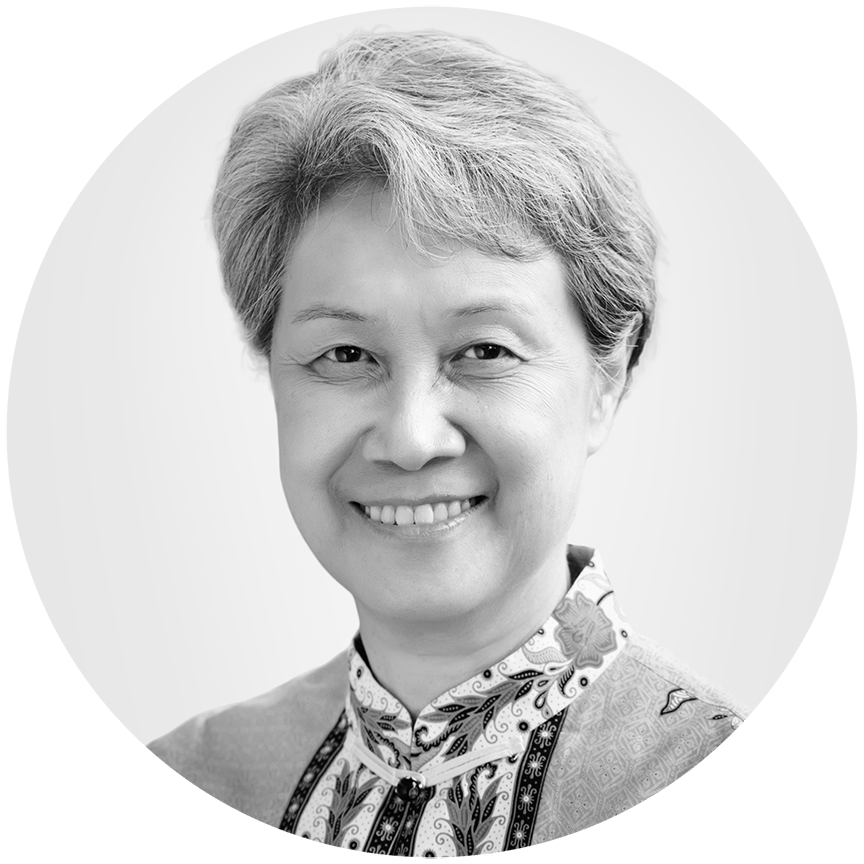
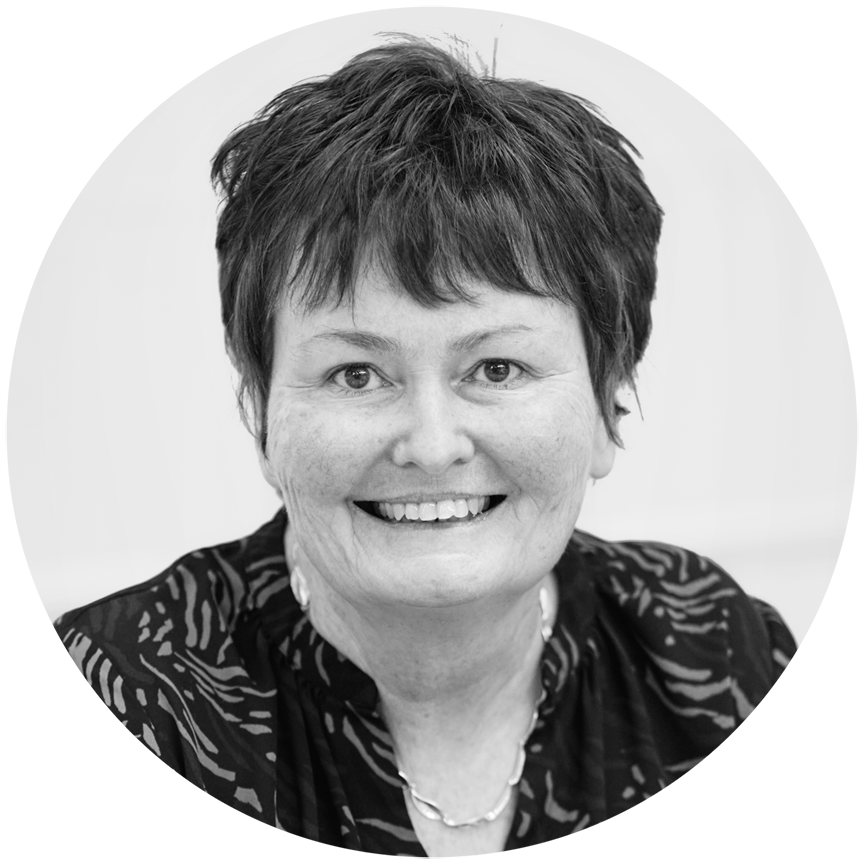
Black and white circular photo of Fiona Powrie, a Wellcome Leap Director.

Director

Fiona Powrie

Professor Dame Fiona Powrie is Director of the Kennedy Institute of Rheumatology, University of Oxford. She gained a PhD in immunology from the University of Oxford and then moved to the DNAX Research Institute in Palo Alto. She returned to the University of Oxford in 1996 where she was the Sidney Truelove Professor of Gastroenterology and Head of the Translational Gastroenterology Unit from 2009-2014.

Fiona’s research is focused on interaction between the intestinal microbiome and the immune system. She identified the role of regulatory T cells in controlling intestinal inflammation and established the cytokine IL-23 as a therapeutic target in inflammatory bowel disease. She is particularly interested in translating basic research into clinical application. She led the Oxford Biomedical Research Centre’s Gastroenterology and Mucosal Immunology theme and with colleagues established the Accelerated Therapy for Arthritis Programme, a clinical research network designed to increase the testing of novel therapies in the clinic.

She serves on a number of scientific advisory boards including the Pasteur Institute in Paris, the Imagine Institute in Paris and the Evergrande Centre in Boston. She received the Louis Jeantet Prize for Medicine in 2012 and was elected a Fellow of the Royal Society in 2011, EMBO in 2013, the Academy of Medical Sciences in 2014 and the US National Academy of Sciences in 2020.

Ethical, Legal, and Societal Implications.

As an organization that challenges conventional wisdom and aims to create more breakthroughs in health, we often find ourselves in uncharted territory.

Patients, families, and communities need advances in human health, and they need them faster. Fundamental new discoveries, new ways of thinking, and new tools that lead to breakthroughs, often require that we simultaneously and responsibly develop frameworks related to the ethical, legal, and societal implications resulting from these breakthroughs. Privacy concerns. Potential misuse of new technologies. Unintended consequences. Rather than ignore or leave such issues for others to solve, we do our best to consider the possible implications of breakthroughs before we even achieve them.

With that in mind— and complementing our networks of scientists and problem-solvers—we’ve convened a group of independent, diverse, multi-disciplinary experts from around the world to advise us with their combined expertise in ethics, cybersecurity, data privacy and consent, financial risk management, information management, and more. We consult regularly with these experts to make sure we’re considering the ethical, legal, and societal implication of emerging breakthroughs—near and far.

Just like we stack the odds to increase the likelihood of creating breakthroughs, we work to increase the likelihood that these advances help bring about the kind of world we want to live in. Together.

Diversity and Inclusion.

Diversity and Inclusion.

Creating breakthroughs in human health is hard. It requires innovation and demands that we solve complex problems. And complex problems are better solved by diverse teams. 

At Wellcome Leap, we set the initial objectives outlined below to help ensure we achieve the level of diversity and collaboration needed to accelerate breakthroughs in human health. Our strong belief is that goals around diversity and inclusion should be clear, transparent, and measurable. Importantly, we recognize that representation is not enough — diversity is necessary, but insufficient. To achieve the desired results, it is also necessary that unique voices and contributions are welcomed and part of decision making. 

To this end, our first goals are centered on inclusion and representation (from different ethnicities, races, genders, in addition to geographies and ecosystems) in our leadership, funding decisions, and program execution.

Leadership:

  1. Build a diverse Board of Directors by recruiting up to 3 additional members. Our board is currently 40% female and international; our next focus is on expanding race and ethnicity.  
  2. Build diverse slates of new Program Directors (PDs) and seek to hire a diverse cohort as measured across approximately 20 PDs over the next 5 years. Notably, because PDs are hired for fixed terms of 3 to 4 years, and the numbers are small, the diversity of this group may shift significantly over time.

Funding decisions and program execution:

  1. Conduct competitive calls where potential performers, at all stages of career and from diverse organizations and backgrounds, have an equal shot at applying and contributing to the program goals. We have no traditional eligibility criteria for performers in terms of career stage, type of researcher or discipline, type of or location of host institution.   
  2. Engage a diverse team of advisors to offer input to the Program Director in the proposal evaluation and selection process; measure representation of proposers through the funnel from abstract to funding decision as a means of testing the equitability of our selection processes. If we find disparities, we will assess why, adjust, and track for improvement.
  3. Ensure program teams work collaboratively toward the program goals, in an environment characterized by rigor, openness, humility, and fairness. Wellcome Leap programs are expected to have not only skilled, capable people, but skilled, capable people who can also work together. Program Directors are expected to set expectations for the team working environment and have the authority to discontinue project funding if standards are not met in both ‘how’ and ‘what’ performers contribute. Unlike individual efforts designed to achieve a goal alone, our programs require multi-disciplinary teams from universities, companies, and non-profit labs working together to solve problems that they cannot solve alone. This creates a rare shared incentive to be open to diverse viewpoints and work together effectively. 
  4. Be quantitative in setting and assessing goals. Over the last decade, numerous studies on annual evaluations and promotion criteria in companies and universities have shown that specificity in goals and measures of success creates more equity and encourages participation from all members of a team. 

An unwavering commitment.

Our mandate is to increase and accelerate breakthroughs in human health. This requires a commitment to bold programs executed with speed and agility by diverse, creative teams. Oftentimes as the work progresses, new challenges or opportunities are revealed. Our commitment is to adjust collaboratively with program participants. This necessarily means that the tasks and teams of performers may change throughout execution – milestones will be modified, adjusted, take on more or less intensity; some performers will leave; new team members will join. The Program Director is responsible for orchestrating activities around a common, specific, and quantifiable goal. For these reasons, our funding is in the form of contracts, rather than grants. 

This form of funding is intended to expand options and complement other research and development efforts. Higher-risk ideas that are often central in a Wellcome Leap program, may not find support elsewhere. It’s a decidedly different way of working, focused on collaboration, intense in pace, mission oriented, and dynamic — we are confident that this type of work adds to both what we accomplish and how we work — together.
Who becomes a Wellcome Leap program director?

Who becomes a Wellcome Leap program director?

The best Program Directors (PDs) are individuals who possess the skills of the best CEOs of science- or engineering-based start-ups. Some PDs may have held such positions. Others may come from academia, government labs, corporations, and nonprofits. They need to have deep technical or scientific knowledge, be natural risk takers, and be thought leaders who can create a vision that inspires an entire community to action. 

The PD must orchestrate the entire effort. He or she determines what pieces of work are needed to produce a specific result, conducts a proposal competition, and contracts organizations to do the work. Program Directors then oversee the collection of performers, manage the technical details, and make all the major program decisions. They handle budgets, contracts, execution issues, speaking engagements, and partner relationships. This may entail explaining a project in three minutes to a world leader who may or may not have a technical background, delivering a technical talk at a research conference, working out intellectual property concerns with a university, discussing necessary regulatory changes needed to allow new advances to make an impact, or negotiating for follow on transition work with partners. 

Many, but not all, project leaders have PhDs. Typically, they’re 5 to 10 years past earning their last degree, and already have made important achievements (delivering a product to market, successfully leading a university research center, starting a company). Confidence is important. These mid career leaders may recruit people who are older with accomplished reputations; they must be able to hold their own. Notably, they rarely have MBAs. The skill set that you acquire in business school is often about defining the market opportunity, writing a plan, and then faithfully executing it. By contrast, successful program directors are more focused on managing constant flux — building, replanning, changing tack, and moving talent in and out as project needs shift.


Ho Ching

Director

Ho Ching

Ms. Ho Ching is Chairman of Temasek Trust, a non-profit philanthropic trust. 

Ho Ching recently retired as CEO & Executive Director of Temasek Holdings with effect from 1 October 2021. During her 17-year tenure as CEO, she oversaw its transformation into a global long-term investor.  

Ho Ching began her 11-year engineering career with the Ministry of Defence in 1976, where she rose to become Director, Defence Materiel Organisation and concurrently Deputy Director, Defence Science Organisation.

In 1987, Ho Ching joined the Singapore Technologies group as its Director of Engineering, and became its President & CEO (1997 – 2001). She was the founding Chairman of Singapore Technologies Engineering, and joined Temasek as Executive Director in 2002.

Ho Ching is a Distinguished Engineering Alumnus of the National University of Singapore, and a Fellow of the Academy of Engineering Singapore. She has served in various public service organisations, including as Chairman of the Singapore Institute of Standards and Industrial Research, and as Deputy Chairman of the Singapore Economic Development Board, and the National Productivity Board.

In the non-profit space, she is also Chairman of the Trailblazer Foundation, and advisor to the Autism Resource Centre. She is the patron of the Autism Association of Singapore, and the Assisi Hospice Singapore. 

She holds a Bachelor of Engineering (Honours) from the University of Singapore (now National University of Singapore), and a Master of Science in Electrical Engineering from Stanford University, USA.

Why does Wellcome Leap’s model of innovation matter?

Why does Wellcome Leap’s model of innovation matter?

One of the primary elements of the model’s past success is its emphasis on bringing basic scientists and engineers together to work on a single project with bold goals and tight timelines. This creates a cauldron of activity that is driven by the urgency and demands of a global problem. This kind of work falls into what’s known as Pasteur’s Quadrant.

Opportunities in Pasteur’s Quadrant are perishable in time. Either the problem shifts or the science does. So speed and agility are important. And because the goals are ambitious, we most often require diverse ideas and a vibrant mix of participants working from their home organizations. This is almost a unique characteristic of Pasteur’s Quadrant projects, which are almost always multi-discipline, multi-community, multi-stage and dynamically adapting throughout the program.

This also requires strong partnerships, humility, and respect. Because work in Pasteur’s Quadrant depends on a robust basic science discovery engine and organizations that scale innovations in the public and private sector.

This strategy is described in more detail in “Special Forces Innovation: How DARPA Attacks Problems”, Harvard Business Review, Dugan & Gabriel, 2013.

Oops!

We can’t seem to find the page you’re looking for.

The page you are looking for is not available due to an incorrect or out-of-date link, or the page may no longer exist.

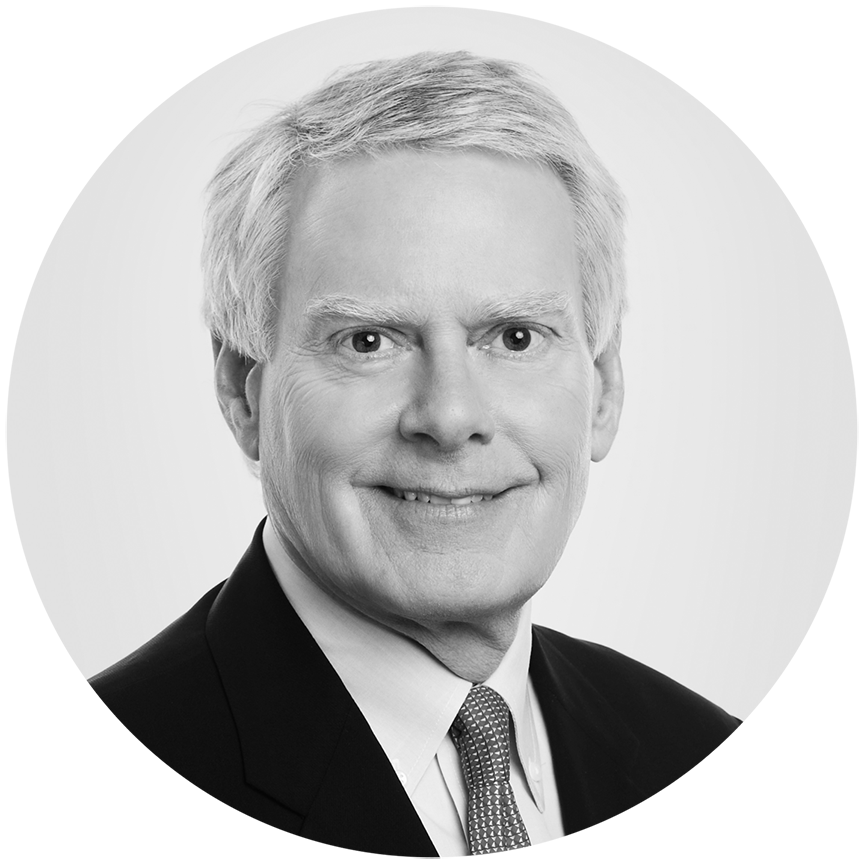
Jay Flatley

Chair

Jay Flatley

Jay led Illumina as CEO from 1999 until 2016, as Executive Chairman through 2019 and now serves as Chairman of the Board of Directors. During his tenure as CEO, he took the company from $1.3 million in sales in 2000 to $2.2 billion in 2015, representing a compound annual growth rate of 64 percent. He oversaw the company’s expansion from microarrays into next-generation sequencing with the acquisition of Solexa in 2006, and from research into clinical and applied markets. Under his leadership, Illumina was named multiple times to the Deloitte & Touche Fast 50 and Fast 500 lists, as well as to the Forbes 25 Fastest-Growing Tech Companies (2007, 2009 and 2010), the Fortune 100 Fastest-Growing Companies (2010 and 2011) lists, and recognition by MIT Technology Review as the World’s Smartest Company in 2014.

In addition to his work at Illumina, he serves on the Board of Directors at Coherent and Denali, is Lead Independent Director at Zymergen, Chairman of the Board at Iridia, and is on the Board of Trustees for The Salk Institute.

Jay received a B.A. in economics from Claremont McKenna College and a B.S. and M.S. (summa cum laude) in industrial engineering from Stanford University.

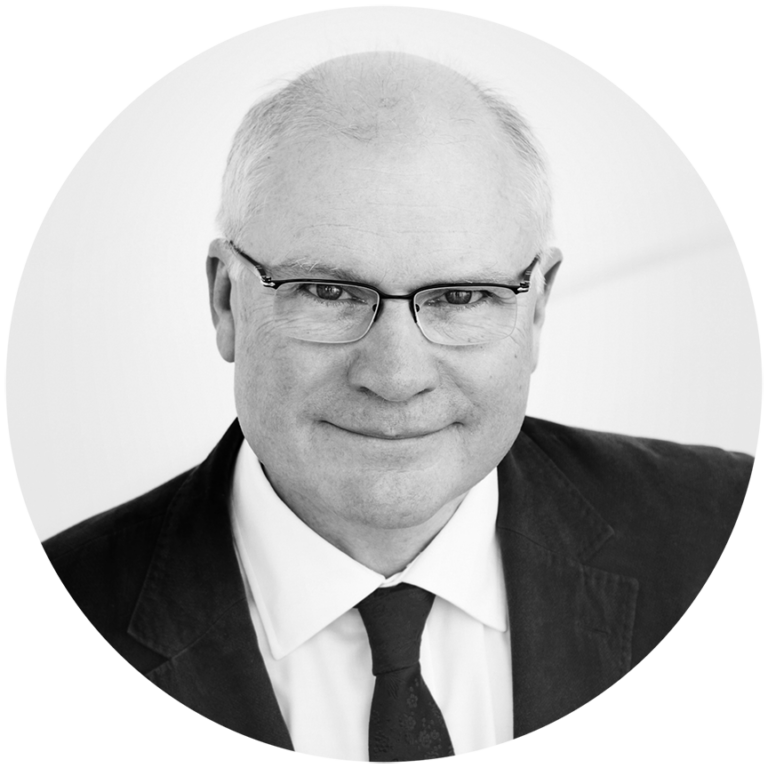
Mike Ferguson

Director Emeritus

Mike Ferguson

Mike obtained a PhD in Biochemistry in London and was a post-doc at the Rockefeller University and Oxford University before moving to the University of Dundee. Mike was appointed the first Regius Professor of Life Sciences in 2013. At the University of Dundee, he helped establish the Drug Discovery Unit and the Proteomics Facility. Mike is known for his work on the structure and biosynthesis of parasite surface molecules and for solving the first structures of glycosylphosphatidylinositol (GPI) membrane anchors, which play important roles throughout eukaryotic biology. He believes in working across disciplines and in translational research. He has contributed to the growth of the Life Sciences sector in Dundee through the provision of research laboratories and technologies and, most recently, has co-led the Growing the Tay Cities BioMedical Cluster component of the Tay Cities Deal – designed to assist economic development.

Mike was a member (2012-2017) and then Deputy Chair (2018-2021) of the Wellcome Trust Board of Governors and a member of the Board of Directors of Wellcome Leap (2019-2022). He is a member of the Board of Directors of the Medicines for Malaria Venture (MMV) (2012-present) and UK Biobank (2022-present).

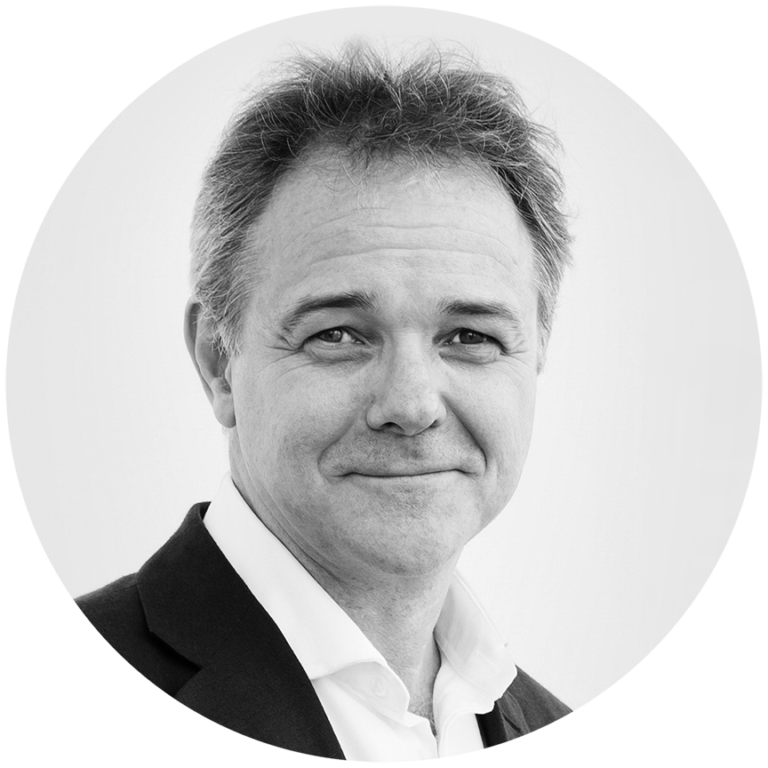
Jeremy Farrar

Director Emeritus

Jeremy Farrar

Jeremy was the Director of the Wellcome Trust from 2013-2023 – a politically and financially independent global charitable foundation that exists to improve health by helping big ideas to thrive. He left Wellcome in February 2023 to take on a new role as Chief Scientist at the World Health Organization.

Jeremy is a clinician scientist who before joining Wellcome was, for eighteen years, Director of the Oxford University Clinical Research Unit in Vietnam, where his research interests were in infectious diseases and global health with a focus on emerging infections, he has published almost 600 articles. He was named 12th in the Fortune list of 50 World’s Greatest Leaders in 2015 and was awarded the Memorial Medal and Ho Chi Minh City Medal from the Government of Vietnam. In 2018 he was awarded the President Jimmy and Rosalynn Carter Humanitarian of the Year Award and in 2019 was knighted for services to global health. He is a Fellow of the Royal Society, the European Molecular Biology organization, the US National Academies and the UK Academy of Medical Sciences.